Refrigerant Leak Repair in Austin, TX
AC refrigerant leak checks and repairs for warm vents, hissing, ice, and low cooling.
A dirty return-air filter is often the first thing people check when rooms turn warm, and changing it is a sensible step. A loaded filter can restrict airflow across the evaporator coil, but a clean filter cannot replace refrigerant that has escaped from a copper line, service valve, or coil. Lowering the thermostat setting may make the system run longer, yet supply vents can remain warm when refrigerant charge has fallen.
A refrigerant leak should not be treated as a wait-and-see problem after warm air, ice, or repeated cooling loss appears. A low refrigerant charge can leave the evaporator coil too cold and make the compressor run long cycles without moving heat correctly. We inspect systems across Austin, Rollingwood, West Lake Hills, and Lost Creek before a small opening in a fitting, line set, or coil creates a larger cooling problem.
Warm air and hissing
Warm air from supply vents while the thermostat still calls for cooling is one common reason people contact us. A hissing or bubbling sound near the outdoor condenser, refrigerant lines, or indoor air handler can also point to gas moving through a small opening. Some systems run almost continuously but cannot lower the temperature in one room or across the house.
Ice on the insulated copper suction line or on the evaporator coil is another visible symptom, especially when airflow from the vents gets weaker. Water around the indoor unit can follow when ice melts after the system cycles off. Warm vents, a hiss, a frosted line, and long run times can come from different faults, so the repair scope and materials can differ even when the symptoms sound alike on the phone.
Leak detection callout
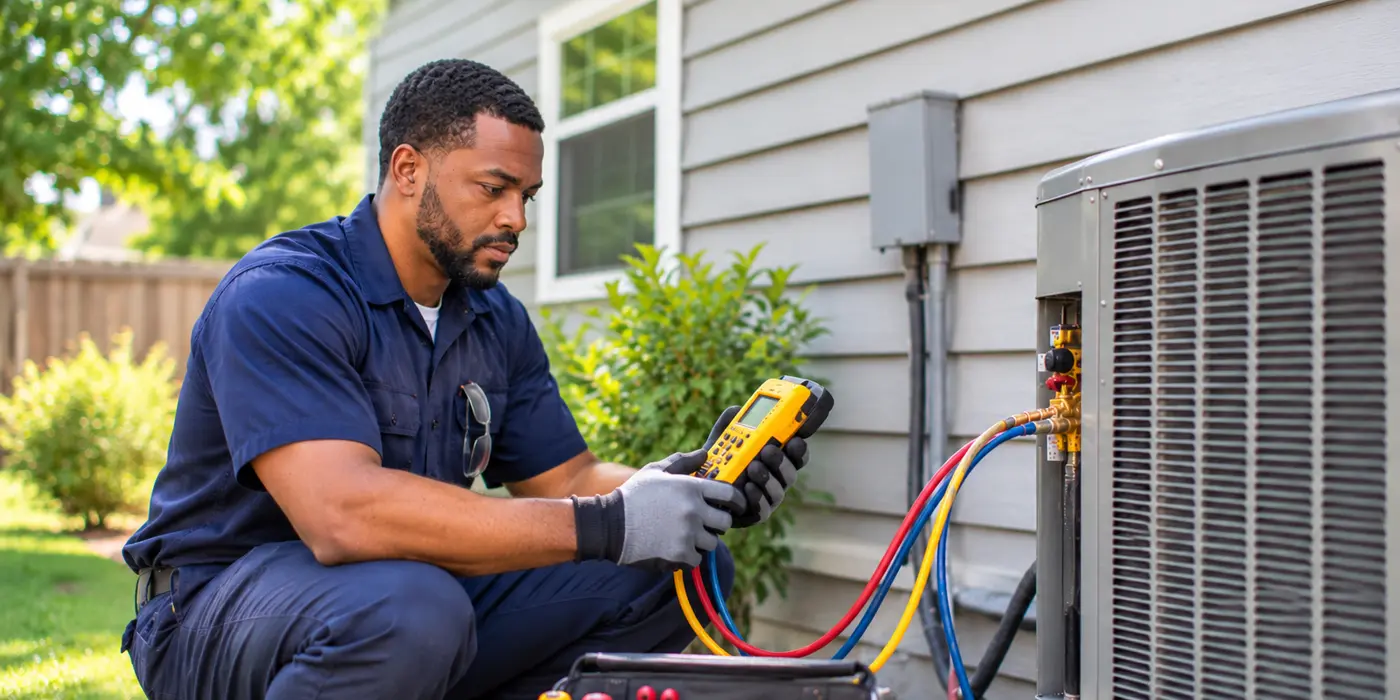
During a leak detection callout, we read the model data, inspect the condenser and air handler, and measure operating pressure readings in psi against the equipment information. We check the 1/4-inch service ports, valve caps, line-set joints, coil faces, and visible oil residue around fittings. An electronic detector sweep of accessible valves, copper lines, and coil areas commonly takes 30 to 60 minutes.
A leaking Schrader core, cap seal, or accessible flare fitting can often be replaced and leak-tested during the same visit, followed by evacuation and recharge when the system condition permits. An accessible braze repair may also be completed at the unit after the leak location is confirmed. A concealed line route, damaged coil, or ordered part is documented for another visit, and fluorescent dye can require 24 to 48 hours of system operation before a very slow leak becomes visible.
Coil access and line set
We assess the age and condition of the evaporator coil, condenser coil, service valves, and copper line set because aging metal can change the repair path. A leak at an exposed valve or fitting usually allows direct testing and repair, while a leak inside a coil cabinet or behind finished walls requires more access work. Attic air handlers, tight closets, crawlspaces, and rooftop condenser locations can also change the labor and equipment needed to reach the leak.
A seized service valve, corroded fitting, or damaged line connection can require additional parts beyond the original leak point. Coil assemblies and manufacturer-specific valves may need to be ordered when the model plate identifies a matching component. We also identify whether building sign-off, property-management approval, or warranty documentation is needed before work at a shared wall, rooftop unit, or managed property.
Model plate and air handler
Before you call, the model number from the outdoor condenser data plate or air-handler label helps us match refrigerant specifications and likely service parts. The condenser plate is usually on the cabinet side, while the air-handler label may be behind a service panel or inside a closet. Tell us which room has warm vents and whether the indoor unit, attic access, or outdoor condenser has a clear path. Let us know whether the system is running now, whether a copper line has ice, and the system age or any recent work at a service valve. Mention a locked gate, narrow attic hatch, or occupied tenant space so we can plan access around the equipment. Call (737) 239-8011 before a low refrigerant charge makes the compressor run hotter and longer than it should.
When we are open
Mon–Sun Open 24 hours
Next
Next: compressor repair, or back to the home page.